
Water entering your property can quickly lead to ceiling damage, mould growth, electrical hazards, and costly repairs.


Your safety should be the main priority.
Only when it is safe to do so:
Switch off nearby electrical points if water is present
Contain the water with a container to prevent collateral damage
Take photos of the damage as it can help with initial assessment
Monitor the leak during rainfall as it can assist in identifying the source of water ingress
Relocate valuables and cover surfaces to prevent water damage
Arrange a professional inspection before the next heavy rainfall
Any attempt may aggravate the leak
If the ceiling sags or swells, make a small pinhole at the lowest point to drain water to prevent sudden water release.
Using tape, cement, silicone or paint on the ceiling usually traps water inside and can make internal damage worse.
Immediately turn off the affected circuit at the DB box if safe to do so. Avoid if safety is uncertain, the area is wet or water contact is required.
Even if the leak disappears, water may still be trapped in the roof or ceiling and will return during the next rainfall, causing more damage.
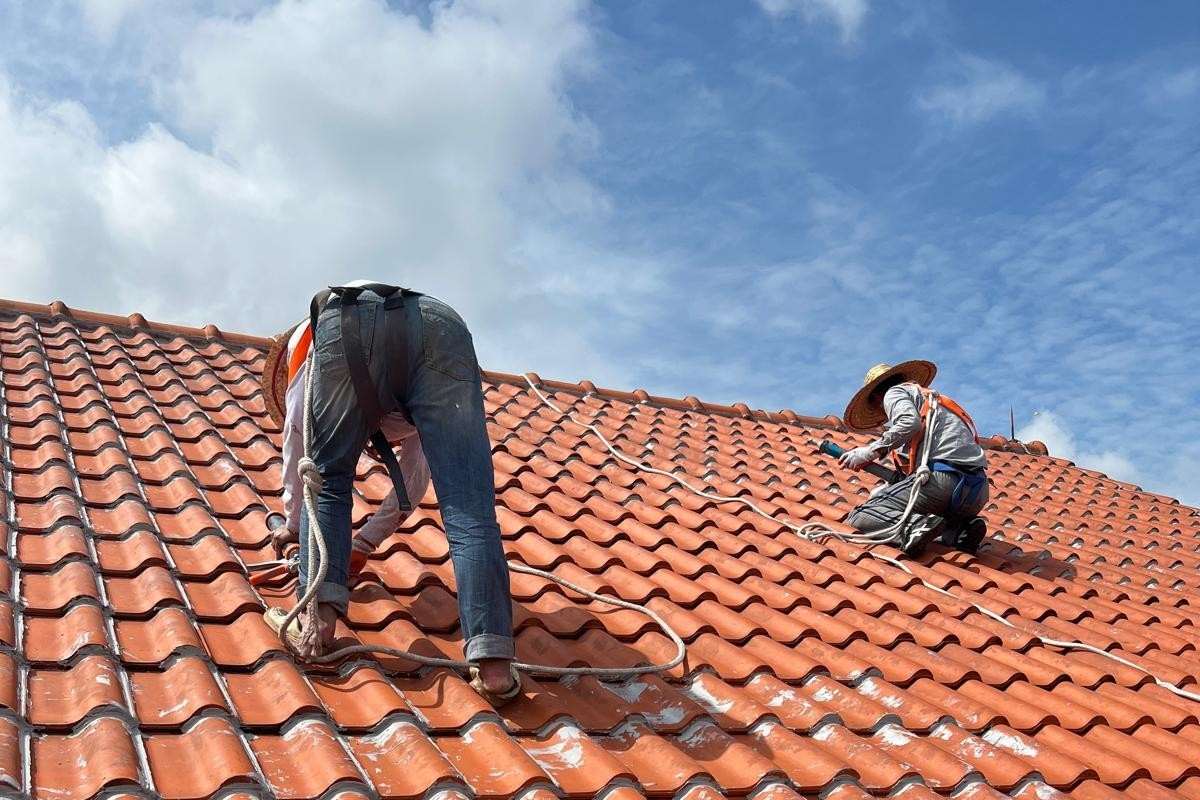
Avoid climbing on the roof when wet or slippery. Tiles may be unstable which can be dangerous. Engaging professionals will be safer.
Large containers can become too heavy to handle as water fill, leading to overflow and potential damage to floors and furniture.
At GJC Waterproofing, we establish credibility through clear and consistent communication, ensuring our process remains fully transparent.
Inspection of intrusion, locate origin of leak, surface cracks and drainage performance, as well as existing waterproofing systems condition
Determining the issue we are dealing with, be it waterproofing coating failure, structural cracking, drainage complications or a combination of defects
Since every one of your home is unique, depending on the condition and after the on-site diagnosis, material systems, repair scopes and quotation will be presented
In Singapore’s intense tropical climate, a small water spot on your ceiling is a ticking clock. Between heavy monsoon downpours and unrelenting UV exposure, roof leaks are highly progressive. They never stay small, and they never fix themselves. Many property owners notice a leak and decide to wait, intending to take their time finding the perfect contractor or waiting for the dry season. However, delaying a repair does not freeze the problem, in fact it might even accelerate structural decay. While you wait, a minor drip silently transforms into a major structural hazard beneath the surface of Singapore landed homes and shophouses:
1. Concrete Cancer & Spalling Concrete: This is the ultimate danger of an untreated RC roof leak. When water saturates the concrete slab, it reaches the internal steel reinforcement bars (rebar). The steel rusts and expands up to mass levels, cracking the surrounding concrete from the inside out. Eventually, heavy chunks of the concrete ceiling physically split and break away, posing a severe structural and safety hazard.
2. Rapid Timber Rot & Structural Weakening: In roofs supported by structural timber framing such as classic pitched roofs or conserved shophouses, constant moisture quickly causes wet rot. This silently strips the load-bearing capacity of your rafters and battens, leading to sagging rooflines and structurally unstable tiles.
3. Efflorescence & Chemical Degradation: As water travels through the concrete slab, it leaches out natural calcium hydroxide. When this hits the air on your interior ceiling, it forms unsightly, powdery white salt crusts (efflorescence). This chemical leaching process slowly degrades the structural density of the concrete itself over time.
4. Electrical Hazards & Short Circuits: Water tracking along conduits, metal purlins, or timber beams quickly finds its way into false ceilings. It pools around downlights, air-conditioning fan coils, and embedded wiring, triggering constant safety-trip failures or dangerous electrical fire risks.
5. Destruction of Premium Interior Finishes: Before water drops even hit your flooring, it completely ruins expensive built-in carpentry or attic wardrobes, destroys plasterboard false ceilings, and causes internal wall skim coats and premium paints to bubble, peel, and grow toxic mold.
6. Mold Outbreaks & IAQ Deterioration: Trapped moisture in unventilated roof voids or false ceilings turns into a hot house for toxic black mold. This ruins internal plasterboard finishes and severely damages your indoor air quality (IAQ), risking your family's respiratory health.
The Cost Fact: Early intervention is the single best way to protect your property's valuation. While you search for a contractor, taking immediate action on an isolated drip saves tens of thousands in structural engineering and concrete remediation costs down the road.
When dealing with water ingress, trying to manage the symptoms yourself or delaying professional intervention will only prolong the damage. Avoid these four common pitfalls:
1. Managing the Drip with Pails and Towels for An Extended Period of Time. Placing a pail on the floor or a towel in the attic to catch the water, thinking the leak is "contained" as long as your flooring stays dry. A pail only catches the water that makes it all the way through your ceiling. It does nothing to stop the gallons of water currently trapped inside your concrete slab or soaking into your structural timber framing. While your floor stays dry, your roof structure is silently rotting and weakening above you.
2. Using DIY Silicone for Surface Cracks. Standard retail sealants lack the elongation properties and UV stability required for exposed concrete structures. Under intense daily thermal expansion, the concrete moves, causing rigid silicone to tear away from the crack edges. This actually traps water inside the crack, speeding up internal rebar corrosion.
3. Delaying Repairs to 'Shop Around' or Waiting Until the "Monsoon Season". Just because the roof only drips during exceptionally heavy, wind-driven inter-monsoon storms and it is not dripping into your living space does not mean the roof is dry. Concrete acts like a dense sponge; once water enters, it stays trapped inside for weeks, silently corroding the steel rebar every single day. Waiting converts a simple localized repair into a major structural overhaul.
4. Relying on Localised Patching for an Aging Membrane. Waterproofing membranes on exposed RC roofs degrade uniformly from UV exposure. If one section has dry-rotted or cracked enough to cause a major leak, the rest of the membrane is usually at the end of its operational lifespan. Patching one spot simply forces the water to travel laterally beneath the membrane and pop out through a different weak point a few weeks later.
If you have any unanswered question, feel free to email us at contact@gjcwaterproofing.com.sg or Whatsapp us. We will get back to as soon as possible.
Urgent assessments may be arranged depending on project severity and schedule availability.
In some cases, yes. However, failing or incompatible systems may require removal before new application. At GJC Waterproofing, we do not engage in "predatory upselling" and "'rouge mechanic"
No. Paint may temporarily improve appearance but does not resolve active waterproofing failure.
Early repairs help prevent worsening structural damage and higher restoration costs.
Poor drainage slope, blocked drains, or uneven surfaces may trap water after rainfall.
Roof leaks are tricky because water rarely travels in a straight line; a leak showing up in a living room ceiling might originate a few meters from the roof. We don't guess. We perform a thorough physical inspection checking for cracked membranes, damaged flashing, or blocked drainage. If the source isn't obvious, we use diagnostic methods like thermal imaging (infrared cameras that detect trapped moisture under the surface) or conduct a water ponding test to isolate and confirm the exact entry point before we touch anything.
It depends entirely on the age and overall condition of your current waterproofing layer. If the roof is relatively new and suffered localised damage, we will suggest a targeted patch which is both completely fine and cost-effective. However, if the existing membrane is the causation, patching the affected areas is a temporary bandage. The water will simply find the next weakest point in time to come. We will give you an honest assessment after our inspection.
Not necessarily. Whenever possible, we look for non-destructive methods. Hacking is loud, messy, expensive, and often completely unnecessary if the underlying structure is physically sound. At GJC Waterproofing, we offers highly reliable, non-destructive alternatives that save you time and money, unless the water leak has gone ignored for so long that the internal steel rebar has rusted, expanded, and caused chunks of the concrete ceiling to crack and fall away. The structure has to be treated before rebuilding it. Other signs include:
Hollow or Popping Tiles: The tiles on your roof terrace are lifting, cracking, tenting, or sound completely hollow when tapped, the tile adhesive has failed. Applying a coating over structurally unstable tiles will fail, so they must be hacked away to reach a solid base.
Severely Waterlogged Substrates: If a thermal moisture scan reveals that water has completely saturated the insulation or screed layers beneath the surface across a massive area, trapping that moisture under a new coating will cause intense blistering. The wet sections must be cut out or completely hacked to let the structure dry.
A standard residential or small commercial roof takes a couple of day to weeks depending heavily on the weather and systems used. Waterproofing requires dry surfaces to cure properly. Good news is that since all the work happens outside and on top of the building, your daily indoor routine will not be disrupted. The only thing you will notice is some minor foot traffic noise on the roof and the faint smell of coatings or primers during application. In the event of a total replacement of the membrane or hacking, some clients may prefer to stay clear of the property for a short period of time. Great time to go for a vacation!
We monitor local weather before commencing works. If rain is expected, we do not apply liquid coatings or open up vulnerable sections of the roof. If an unexpected shower hits, we always have heavy-duty, commercial-grade tarps ready to instantly tent and secure the workspace. Your interior will remain protected throughout the process.
We provide a warranty of up to 3 years, depending on systems and work done, on both our workmanship and materials. This means if the roof leaks again in the treated areas due to a failure in our application or material defect, we will come back and repair it at zero cost to you. Please note that warranties generally cover the specific areas we waterproofed, not new damage caused by major structural settling or external third-party modifications later on. Full coverage will be explained before total handover.
With proper application and professional materials, a quality roof waterproofing system should easily last 10 to 15 years. To maximize that lifespan, we highly recommend a quick annual inspection to clear debris from gutters and drains, ensuring water does not pool continuously on the membrane.
In inter-terraces and semi-detached properties, roofs are physically joined. Frequently, a leak showing up on your attic ceiling is actually caused by broken clay tiles or a failed concrete membrane on your neighbor's side of the property line. Water simply tracks laterally along the shared beams. Here is how we help you resolve this smoothly:
1. Non-Invasive Diagnostic Evidence: We use thermal imaging cameras and moisture meters to map out the water path. This gives you clear, undeniable visual proof to show your neighbor exactly where the water is entering.
2. Joint-Repair Solutions: We highly recommend speaking with your neighbor about doing a joint repair. Fixing both sides of the shared ridge or party wall flashing simultaneously is the only way to guarantee a permanent seal.
3. Isolating Your Boundary: If your neighbor is uncooperative or delaying repairs, we can apply specialized boundary-isolation flashing and high-build vertical barriers along your property line to shield your home independently as much as structurally possible.
GJC Waterproofing
Pte Ltd
Team with 27 years of trusted waterproofing solutions in Singapore. System-based approach for lasting results.
Services
© 2026 GJC Waterproofing Pte Ltd. All rights reserved.
Registered | UEN: 202618678D


